Each clinical application below is grounded in selective photothermolysis principles and supported by peer-reviewed published data. We present the mechanism of action, expected outcomes based on published evidence, and the technical limitations practitioners should understand.
| Skin Type | Wavelength | Fluence | Spot |
|---|---|---|---|
| I-III | 755nm Alex | 16-20 J/cm² | 18mm |
| III-IV | 755nm Alex | 12-16 J/cm² | 15mm |
| V-VI | 1064nm Nd:YAG | 30-50 J/cm² | 15mm |
Starting parameters. Adjust based on Skintel melanin reading, test spot response, and patient history. Values from published treatment protocols.
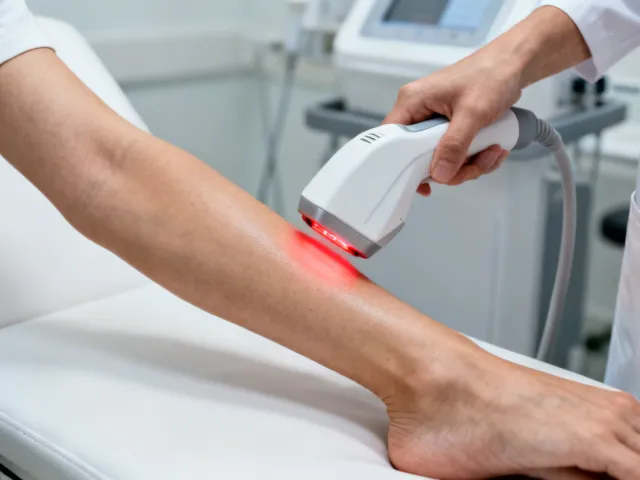
Long-pulse laser energy is absorbed by melanin in the hair follicle shaft and bulb. The absorbed energy converts to thermal energy, raising the temperature of the follicular structure above the damage threshold (approximately 70 degrees C) while the surrounding tissue remains below its damage threshold. This selectivity is achieved by matching pulse duration to the thermal relaxation time (TRT) of the hair follicle — typically 10-100 milliseconds depending on follicle diameter.
The 755nm alexandrite wavelength offers the highest melanin absorption coefficient among commonly used aesthetic wavelengths, making it the most efficient choice for patients with fair to medium skin tones. For darker skin types, the 1064nm Nd:YAG wavelength provides adequate melanin absorption with lower epidermal melanin interaction, reducing the risk of post-inflammatory hyperpigmentation.
Published multi-site clinical data for the Elite iQ platform demonstrates 80-90% reduction in terminal hair count at 12-month follow-up after a series of 4-6 treatments at 4-8 week intervals. Response rates vary by body area (axillae and bikini respond faster than extremities), hair color (dark hair responds better than light brown), and hormonal status.
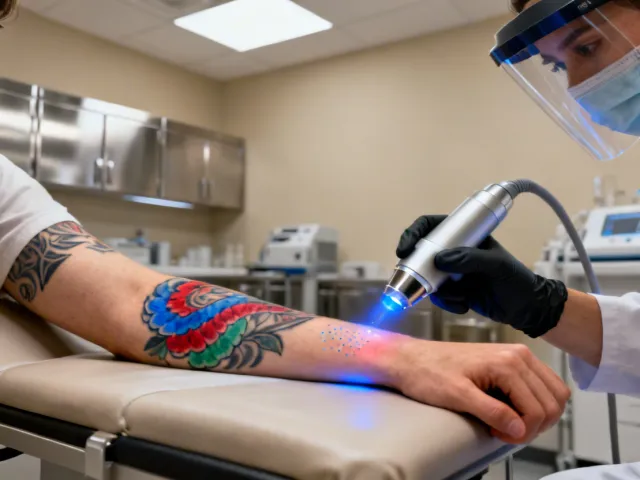
Conventional nanosecond Q-switched lasers fragment tattoo ink particles primarily through photothermal interaction — heating the ink until it fractures. PicoSure's picosecond pulses generate a predominantly photomechanical effect (PressureWave technology) that creates pressure waves around ink particles, shattering them into smaller fragments that the body's lymphatic system can clear more efficiently.
The 755nm alexandrite wavelength is particularly effective against green, blue, and purple inks that are resistant to the 1064nm and 532nm wavelengths used by most nanosecond systems. This wavelength coverage addresses the clinical reality that many tattoos are multi-colored.
Controlled comparative studies published in peer-reviewed dermatology journals show PicoSure achieves near-complete clearance of multi-colored tattoos in approximately 40% fewer sessions than nanosecond Q-switched Nd:YAG systems. Black ink responds well to both technologies; the differentiation is most significant for green, blue, and resistant inks.
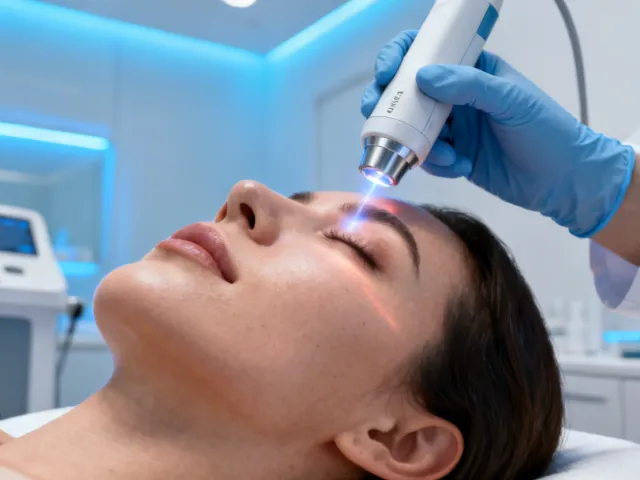
The PicoSure Focus Lens Array converts the standard beam into a diffractive pattern that creates microscopic zones of high-fluence energy separated by untreated tissue. These controlled injury zones trigger a wound healing cascade — specifically, upregulation of collagen III and elastin production measured histologically at 3-month post-treatment biopsy.
Clinical improvement is visible as reduced fine lines, improved skin texture, reduced pore appearance, and more even pigmentation. Published data shows measurable improvement after 3-4 treatment sessions at 2-4 week intervals. Downtime is minimal — typically 24-48 hours of mild erythema — making this a viable "lunchtime" procedure for aesthetic practice revenue generation.
The mechanism is fundamentally different from ablative fractional resurfacing (CO2 or erbium) which removes tissue. PicoSure Focus preserves the epidermis while creating subsurface remodeling zones. This distinction matters for patient selection: patients seeking dramatic improvement in deep wrinkles or severe textural irregularity may need ablative technology. PicoSure Focus is appropriate for mild-to-moderate concerns where minimal downtime is a priority.
Request Clinical ProtocolA reference guide mapping Cynosure laser wavelengths to their primary chromophore targets and clinical indications. Actual treatment parameters depend on patient assessment and clinical judgment.
| Wavelength | Platform | Primary Chromophore | Clinical Applications |
|---|---|---|---|
| 755nm Alexandrite (ns) | Elite iQ | Melanin | Hair reduction (skin types I-IV), pigmented lesions |
| 755nm Alexandrite (ps) | PicoSure Pro | Ink particles, melanin | Tattoo removal (all colors), skin revitalization, pigmented lesions |
| 1064nm Nd:YAG | Elite iQ | Hemoglobin, melanin (deep) | Hair reduction (skin types V-VI), vascular lesions, deep dermal targets |
| 810nm Diode | Vectus | Melanin | High-speed hair reduction (all skin types with parameter adjustment) |
| 1060nm Diode | Body Platform | Adipocyte | Non-invasive fat reduction, body contouring |
Table presents primary indications. Off-label applications exist but should be based on clinical judgment and available evidence. Regulatory clearances vary by market.
Our clinical affairs team maintains a curated bibliography organized by indication, skin type, and laser platform. Request a targeted evidence summary for the specific clinical applications relevant to your practice.